
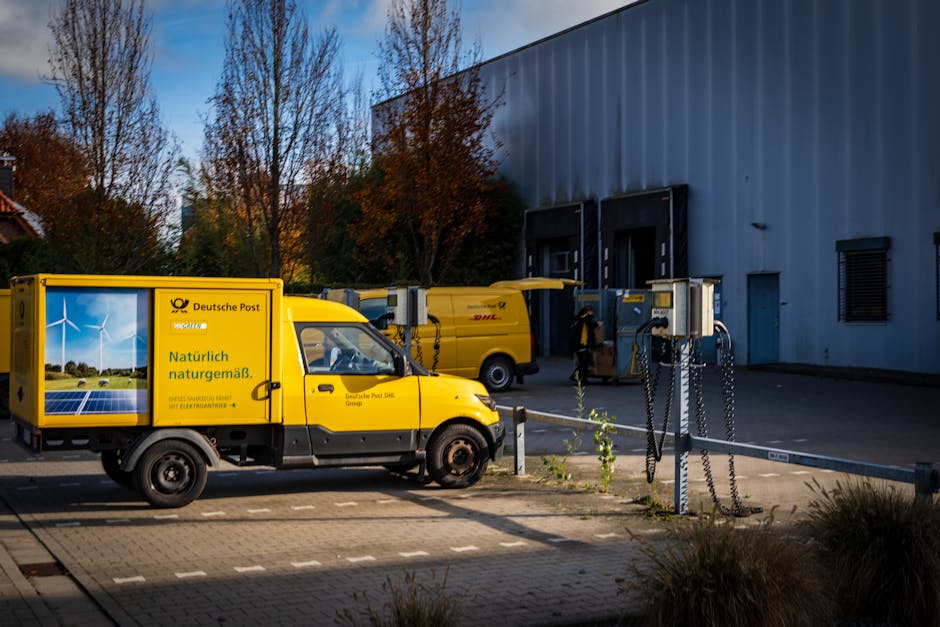
An EV fleet transition is the process of replacing internal-combustion-engine (ICE) vehicles with battery-electric alternatives — and for most fleet managers in the EU, it is no longer optional planning but active scheduling. The EU’s European Commission CO₂ standards for new cars and vans require a 100% reduction in fleet-average CO₂ emissions by 2035, meaning organisations that defer the transition face both regulatory risk and rising residual-value losses on petrol and diesel vehicles purchased today.
What Does an EV Fleet Transition Actually Cost?
Total cost of ownership (TCO) — the full lifetime cost of a vehicle including purchase, fuel, maintenance, insurance, and disposal — shifts significantly when switching to electric. A mid-size electric van costs roughly 15–25% more to acquire than its diesel equivalent in 2025, but running costs tell a different story:
| Cost Category | Diesel Van (per year) | Electric Van (per year) |
|---|---|---|
| Fuel / Energy | €3,200–€4,800 | €800–€1,400 (depot charging) |
| Scheduled Maintenance | €900–€1,400 | €400–€700 (fewer moving parts) |
| Road Tax / BIK (EU avg.) | €300–€600 | €0–€150 (reduced or zero in most EU states) |
| Estimated TCO Difference | EVs break even vs. diesel in 3–5 years at average EU commercial mileage (30,000 km/yr) | |
Fleet managers should model TCO at vehicle level, not fleet average — a delivery van doing 45,000 km/year has a completely different payback profile than a pool car doing 12,000 km/year.
How Should Fleet Managers Plan the EV Fleet Transition?
A structured EV fleet transition avoids the most common failure mode: acquiring EVs before charging infrastructure is in place. Use the following five-step sequence:
- Audit current usage patterns. Export 12 months of mileage, route, and overnight-parking data per vehicle. Identify which vehicles never exceed 200 km in a single day — these are the lowest-risk candidates for electrification.
- Segment the fleet by replaceability. High-daily-mileage, multi-drop, or towing vehicles may require a diesel-to-hybrid bridge rather than a direct EV swap. Segment into: ready now, ready in 12–24 months, and diesel/HVO for now.
- Plan charging infrastructure first. Depot AC charging (7–22 kW) costs €800–€2,500 per point installed; EU co-funding via the Alternative Fuels Infrastructure Regulation (AFIR) is available through national programmes. Budget charging before ordering vehicles.
- Phase procurement by natural replacement cycles. Replace vehicles at end-of-life or lease expiry, not before. Accelerating replacements destroys residual value and inflates TCO.
- Update fleet management processes. Service intervals, document schedules, and driver briefings all change. EV battery health checks, tyre wear monitoring (EVs are heavier — tyre wear runs 20–30% faster), and charge-session logging need to be built into fleet workflows from day one.
Charging Infrastructure: The Most Underestimated Barrier
In fleet surveys across the EU, charging infrastructure consistently ranks as the primary barrier to EV fleet transition — ahead of vehicle cost and driver range anxiety. For depot-based fleets, the calculation is straightforward: if 80% of vehicles return to base overnight, overnight AC charging covers the vast majority of operational needs at the lowest cost per kWh (typically €0.12–0.22/kWh on a business tariff versus €0.45–0.75/kWh at public rapid chargers).
For field-based or multi-site fleets, the model is more complex. Fleet managers should negotiate charge-card contracts with at least two public charging networks to avoid single-point dependency, and set a company policy on reimbursing home charging — HMRC and equivalent EU tax authorities allow flat-rate reimbursements (e.g., 9p/mile in the UK) to simplify payroll processing.
Tyre pressure management also becomes more financially significant with EVs. Because electric vehicles weigh more than ICE equivalents, under-inflated tyres generate disproportionate rolling resistance and reduce range by up to 10%. Fleet managers can find a detailed breakdown of the relationship between tyre pressure and fuel (and energy) costs in How Tire Pressure Affects Fleet Fuel Costs.
Compliance and Documentation During the Transition
Switching vehicle types generates a document management spike: new V5C/registration documents, updated insurance certificates (EV fleet insurance pricing differs materially from ICE — see Best Fleet Insurance UK 2026 for benchmarks), revised driver licences if vehicles exceed 3.5 tonnes, and updated maintenance schedules.
Automated document expiry tracking becomes especially valuable during a transition phase, when the fleet simultaneously holds ICE vehicles on expiring leases and new EVs with fresh documentation cycles. Platforms like Movcar automate document expiry tracking, sending reminders 30, 14, and 7 days before deadlines — reducing the risk of an uninsured or non-roadworthy vehicle slipping through during the changeover period. Movcar requires no hardware installation and starts from €0.40 per vehicle per month, which keeps the software overhead proportionate for SME fleets transitioning 5–30 vehicles at a time.
For fleet managers who also need to overhaul their maintenance scheduling alongside the EV transition, Best Fleet Maintenance Software: How to Choose provides a practical framework for evaluating platforms.
EV Fleet Transition Readiness Checklist
- ☐ 12-month mileage and route data exported per vehicle
- ☐ Vehicles segmented: ready now / bridge / long-term diesel
- ☐ Depot charging capacity assessed and budgeted
- ☐ AFIR or national grant applications initiated
- ☐ Public charge-card contracts in place (minimum two networks)
- ☐ Home charging reimbursement policy drafted
- ☐ Insurance renewed or requoted for EV models
- ☐ Driver training scheduled (charging etiquette, range management)
- ☐ Fleet management software updated with EV service intervals
- ☐ Document reminders activated for all new vehicle registrations
- ☐ Tyre inspection frequency increased (EV weight penalty)
- ☐ Fuel/energy cost reporting updated to track kWh, not litres
Driver Readiness: The Human Side of the Transition
An EV fleet transition that ignores driver behaviour typically underperforms its projected savings by 15–30%. Drivers accustomed to refuelling in five minutes need structured onboarding for charge-session planning, particularly for routes approaching the vehicle’s realistic range (which is typically 15–25% lower than the WLTP-rated figure in winter or at motorway speeds).
Key driver management actions include: pre-departure range checks built into daily workflow, a clear escalation path when public chargers are out of service, and a feedback loop so drivers can flag operational range problems early. A formal driver safety management programme supports this broader cultural change — Driver Safety Management Program: A Fleet Manager’s Guide covers how to structure one.
The EV fleet transition is a multi-year operational project, not a procurement decision. Fleet managers who treat it as a phased programme — audit, segment, infrastructure, procurement, documentation, driver readiness — will reach TCO breakeven faster and with fewer operational disruptions than those who approach it vehicle by vehicle. The regulatory direction is clear; the variable is how well each organisation sequences its own transition.