
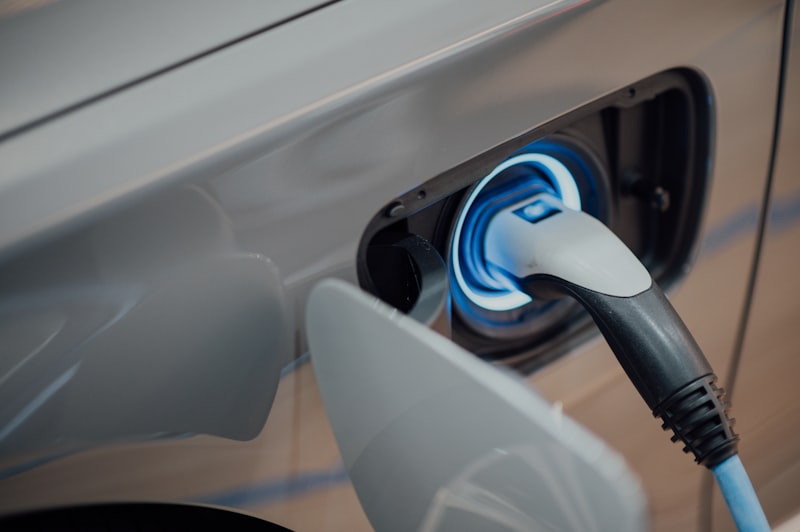
Managing an electric vehicles fleet starts with a good plan. Switching part of your fleet to electric vehicles can reduce fuel costs by 40–60% per vehicle — but only if you plan the transition correctly. For fleets under 50 vehicles, the decision isn’t simply “petrol vs. electric.” It’s a calculation involving route profiles, charging infrastructure, total cost of ownership, driver readiness, and operational continuity. Here’s what fleet managers actually need to evaluate before committing to EVs.
How much can electric vehicles really save a fleet?
The fuel cost advantage is real and measurable. A diesel van consuming 8 litres per 100 km at €1.60 per litre costs approximately €12.80 per 100 km in fuel. An equivalent electric van consuming 20 kWh per 100 km at €0.25 per kWh costs approximately €5.00 per 100 km — a 61% reduction in energy costs per kilometre.
Over 30,000 km per year, that’s €2,340 saved per vehicle in energy costs alone. For a fleet of 20 vehicles, that’s €46,800 per year — before accounting for reduced maintenance costs (EVs have fewer moving parts, no oil changes, less brake wear due to regenerative braking).
However, these savings must be weighed against higher purchase prices (EVs cost 20–40% more upfront than equivalent diesel vehicles), charging infrastructure investment, and potential range limitations that affect operational planning.
Which fleet vehicles should you electrify first?
Not every vehicle in your fleet is a good candidate for electrification. The best candidates share specific characteristics:
Predictable daily routes under 200 km. Urban delivery vans, service vehicles with fixed territories, and commuter pool cars are ideal. Their daily mileage is predictable, and they return to a depot every night where they can charge. Long-haul trucks and vehicles with unpredictable routes are poor first candidates.
High daily mileage within range. A vehicle that drives 150 km daily and can charge overnight is perfect for electrification. A vehicle that drives 400 km with no guaranteed charging access is not — at least not until the charging network matures further.
Depot-based operations. Fleets that operate from a central location can install charging infrastructure once and serve multiple vehicles. Fleets with vehicles parked at drivers’ homes face more complex charging logistics and reimbursement questions.
Vehicles due for replacement. Don’t retire working diesel vehicles early to go electric — the economics rarely justify it. Instead, replace vehicles at the end of their planned lifecycle with electric equivalents. This spreads the transition cost over natural replacement cycles.
What does the charging infrastructure actually require?
Charging infrastructure is where most fleet EV plans stall. The options and their implications:
Level 2 AC charging (7–22 kW). The standard for overnight depot charging. A 22 kW charger fully charges most electric vans in 4–6 hours — perfect for vehicles that return to base each evening. Installation costs €800–2,500 per charging point, including electrical work. For a fleet of 10 EVs, budget €8,000–25,000 for depot charging infrastructure.
DC fast charging (50–150 kW). Charges vehicles to 80% in 30–60 minutes. Useful for midday top-ups on longer routes but significantly more expensive to install (€15,000–50,000 per unit). Most small fleets don’t need on-site fast charging — public fast chargers along routes are sufficient for occasional needs.
Electrical capacity. This is the hidden cost. Your depot’s electrical connection may not support 10 vehicles charging simultaneously. An electrical capacity assessment (€500–1,500) should be your first step before committing to any charging installation. Upgrading electrical capacity can cost €5,000–30,000 depending on the site.
Smart charging management. Software that staggers charging across vehicles based on departure times and electricity tariffs can reduce peak demand charges by 20–30%. This becomes important once you have 5+ EVs charging at the same location.
How do you calculate the real total cost of ownership?
The purchase price comparison between diesel and electric is misleading because it ignores the running cost differential over the vehicle’s lifecycle. A proper Total Cost of Ownership (TCO) calculation for fleet EVs includes:
Acquisition cost. Electric vans are currently €8,000–15,000 more expensive than diesel equivalents. This gap is narrowing annually and varies significantly by market and available subsidies.
Government incentives. Many EU countries offer purchase subsidies (€3,000–9,000 per vehicle), reduced registration taxes, lower company car taxation, and exemptions from urban congestion charges. These incentives can offset 30–60% of the price premium. Check your country’s current incentive programme — they change frequently.
Energy costs. Calculate based on your actual electricity tariff, not national averages. Fleet depot charging typically costs €0.15–0.30 per kWh depending on your energy contract and time-of-use tariff structure.
Maintenance costs. EVs require significantly less maintenance — no oil changes, no exhaust system, no clutch, regenerative braking reduces brake wear by 50–70%. Budget 40–60% less for maintenance per vehicle per year compared to diesel equivalents.
Residual value. EV resale values are stabilising as the second-hand market matures, but depreciation rates still vary significantly by model and market. Factor in a conservative residual value assumption rather than optimistic projections.
Infrastructure amortisation. Spread the charging infrastructure investment across the number of EVs it serves and the expected infrastructure lifespan (typically 10–15 years).
A fleet of 20 vehicles where 8 are replaced with electric equivalents over 3 years will typically reach TCO parity within 3–4 years of each vehicle’s purchase, assuming current energy prices and maintenance differentials hold.
What changes in daily fleet operations?
Your electric vehicles fleet doesn’t just change fuel costs — it changes operational workflows:
Range planning. Dispatchers need to account for vehicle range when assigning routes. Fleet management software that tracks mileage per vehicle helps ensure EVs aren’t assigned routes that exceed their comfortable range. Platforms like Movcar log daily mileage automatically, making it straightforward to match vehicle capabilities to route requirements.
Charging scheduling. Someone needs to ensure vehicles are plugged in when they return to the depot. This sounds trivial but becomes a logistics task with 10+ EVs sharing limited charging points. Assign charging responsibility — either to drivers or to a dedicated depot coordinator.
Driver training. EV driving techniques (regenerative braking, pre-conditioning, efficient speed management) can extend range by 15–20%. A single training session of 2 hours per driver pays for itself within weeks in reduced energy consumption.
Document management. EVs add new document categories to track: charging station contracts, electrical installation certificates, government incentive documentation, and battery warranty terms. Fleet management platforms like Movcar handle these as additional document types with automated expiry tracking — the same system that tracks insurance and inspection certificates also tracks EV-specific documentation.
Cold weather planning. EV range drops 15–30% in cold weather. Fleets operating in northern European climates need to factor this into winter route planning and ensure vehicles are pre-conditioned while still connected to charging.
A practical checklist for electric vehicles fleet electrification
Before committing to EVs, work through this assessment:
- Analyse your route data — identify vehicles with predictable daily mileage under 200 km. These are your first EV candidates. Movcar’s mileage reports show daily distance per vehicle, making this analysis straightforward.
- Get an electrical capacity assessment — before buying a single EV, confirm your depot can support the charging infrastructure you’ll need.
- Calculate TCO per vehicle — compare 5-year total cost (acquisition minus subsidies plus energy plus maintenance plus infrastructure share) against the diesel equivalent.
- Start with 2–3 vehicles — pilot the transition with a small batch. Measure real-world energy costs, driver feedback, and operational impact before scaling.
- Track everything centrally — EV-specific costs (electricity, charging infrastructure maintenance) should be logged per vehicle alongside traditional fleet costs. This gives you accurate data for the next wave of replacements.
The bottom line
Fleet electrification is not an all-or-nothing decision. The smartest approach for fleets under 50 vehicles is a gradual transition: electrify the vehicles that make financial sense today, keep diesel for routes and use cases where EVs aren’t yet practical, and re-evaluate annually as battery technology improves and charging infrastructure expands.
Start with data, not enthusiasm. Analyse your actual route profiles, energy costs, and replacement cycles. The numbers will tell you which vehicles to electrify, when to do it, and how much you’ll save. Platforms like Movcar give you the mileage, cost, and document data you need to make this decision based on evidence, not guesswork.
For platforms that handle electric fleet management alongside ICE vehicles in a single dashboard, see our guide to the best fleet management software for small business.
Ready to simplify fleet management?
Movcar scales from 3 to 5,000+ vehicles at the lowest per-vehicle price in the space. Paid plans from €0.40/vehicle/month. 26+ languages, EU-hosted, GDPR-compliant. 14-day free trial on any paid plan.
Frequently asked questions
Is an electric fleet actually cheaper than diesel? Yes on TCO basis after 3-4 years, no on purchase price. Lower fuel (electricity costs 30-50% of diesel per km), much lower maintenance (fewer moving parts), but 20-40% higher purchase price.
What is the practical range of electric fleet vehicles in 2026? Commercial vans 200-300 km real-world. Cars 350-500 km. Range drops 20-30% in winter and 15% with full payload. Plan routes assuming 80% of stated range.
Do I need depot charging for an electric fleet? Below 5 vehicles: maybe — public charging works if routes allow. Above 5 vehicles: yes, depot AC chargers (7-22 kW) are essential. DC fast chargers are usually overkill for fleet ops.
What grants and incentives are available for electric fleet purchases in 2026? Varies by country. EU: VAT recovery + national incentives EUR 3,000-7,000 per van. UK: plug-in van grant up to GBP 5,000. Germany: BAFA scheme (declining). Always confirm current scheme before order.