
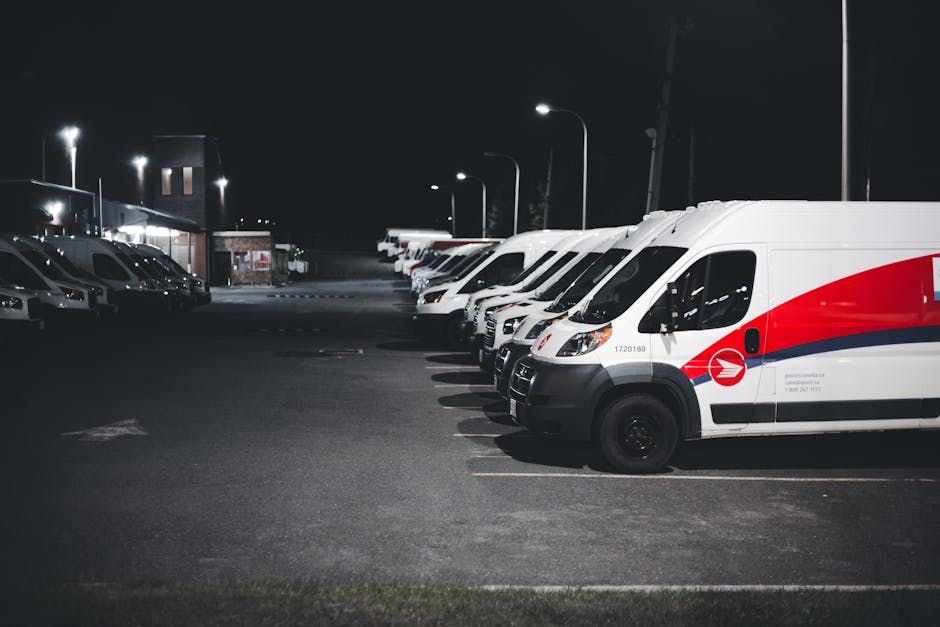
The best fleet management software for small business is one that cuts administrative overhead, keeps vehicles compliant, and costs less per month than a single missed service. This guide breaks down what features actually matter for fleets of 3–50 vehicles, how to compare platforms objectively, and what red flags to avoid when shortlisting tools.
What Does Fleet Management Software Actually Do for Small Fleets?
Fleet management software (FMS) centralises vehicle records, maintenance schedules, driver documents, and compliance deadlines in one place — replacing spreadsheets and paper folders that become unmanageable the moment your fleet grows beyond a handful of vehicles. For small businesses, the core value is not exotic analytics; it is preventing the preventable: a vehicle operating with an expired insurance policy, a service overdue by 3,000 km, or a driver whose licence check was never logged.
Key functions relevant to small fleets include:
- Document expiry tracking — MOT, insurance, roadworthiness certificates, driver licences
- Maintenance scheduling — by calendar date and/or odometer reading
- Driver management — licence records, incident reports, expense submissions
- Cost tracking — fuel, repairs, insurance premiums per vehicle
- Multi-vehicle overview — a single dashboard showing the status of every asset
Platforms like Movcar automate document expiry tracking, sending reminders 30, 14, and 7 days before deadlines — so compliance gaps surface before they become fines or insurance voids, not after.
How Much Should Small Businesses Expect to Pay?
Pricing in the FMS market varies enormously, and the gap between entry-level and enterprise platforms is wider than most buyers expect. The main cost models are:
| Pricing model | Typical range | Best suited to |
|---|---|---|
| Per-vehicle SaaS (cloud-only) | €0.40–€5.00 per vehicle/month | SME fleets, 3–100 vehicles |
| Hardware + software bundle | €10–€30+ per vehicle/month plus hardware cost | Fleets needing GPS telematics |
| Enterprise licence | Custom, often €50k+ per year | Large corporates, 500+ vehicles |
| Free tier | €0 (limited vehicle count) | Micro-fleets trialling a platform |
For context: Movcar’s paid plans run €0.40–€2.00 per vehicle per month on annual billing, with a 20% new-customer discount and a permanent free plan for up to 3 vehicles. Hardware-dependent platforms that bundle telematics devices frequently cost 5–10× more per vehicle and require professional installation — a genuine barrier for owner-operators managing 5 or 10 vans.
No-hardware fleet software lets SMEs start managing their fleet within minutes, without installing telematics hardware. That matters when you are a logistics director at a 15-vehicle courier operation, not an IT department at a national carrier.
Best Fleet Management Software for Small Business: Key Features to Compare
When evaluating the best fleet management software for small business, treat these as non-negotiable criteria rather than nice-to-haves:
- Cloud-only or hardware-required? Hardware adds upfront cost, installation time, and a dependency on device availability. Cloud-only platforms deploy instantly across any device.
- Document and compliance management. Automated reminders for MOT, insurance, and roadworthiness certificate expiry are the single highest-ROI feature for SME fleets. Manual tracking fails at scale.
- Maintenance scheduling by mileage AND date. Date-only scheduling misses high-mileage vehicles that hit service intervals early. The best platforms trigger alerts on whichever threshold arrives first.
- Driver app availability. If drivers need to submit expense reports, log fuel fills, or sign vehicle handover forms, a driver-facing mobile app eliminates paper and reduces back-office data entry. Movcar’s Corporate plan includes a driver app for incident reporting, expense reporting, and e-signature handovers.
- Multi-language support. Fleets operating across EU borders — or employing drivers of different nationalities — need an interface that works in their drivers’ languages. Movcar supports 26+ languages including EN, DE, PL, RO, FR, ES, AR, and TR. For a deeper look at why this matters, see the guide to multi-language fleet management software.
- GDPR-compliant data hosting. If your fleet operates in the EU, vehicle and driver data must be stored in compliance with GDPR. Confirm that the vendor’s servers are EU-hosted, not just EU-accessible.
- Transparent pricing with a free trial or free tier. Any vendor that refuses to publish pricing publicly deserves extra scrutiny before you sign a contract.
What Are the Most Common Mistakes Small Fleets Make When Choosing Software?
Based on the structure of how SME fleet failures tend to occur, four mistakes recur consistently:
1. Over-buying features they will not use. Enterprise FMS platforms often include route optimisation engines, tachograph (the on-board recording device required for commercial vehicles under EU Regulation 561/2006) analysis modules, and fuel card integrations. A 10-van plumbing contractor does not need tachograph analysis. Paying for it inflates per-vehicle costs without delivering value.
2. Under-estimating document compliance risk. According to the UK’s Driver and Vehicle Licensing Agency (DVLA), vehicles operating without valid insurance can result in fixed penalties, court prosecution, and vehicle seizure. The equivalent risk exists across EU member states. Yet many small fleets still track insurance renewal dates in a shared calendar — a system that fails the moment an entry is missed or the person who manages it leaves.
3. Choosing hardware-dependent platforms too early. Hardware telematics adds real value for large fleets where route efficiency, driver behaviour scoring, and fuel consumption data justify the investment. For a fleet of 5–15 vehicles, the payback period is often longer than the contract term.
4. Not planning for fleet growth. A platform that works for 5 vehicles but charges per-seat pricing that triples your cost at 20 vehicles is a migration problem waiting to happen. Evaluate pricing at your projected fleet size in 24 months, not just today.
If you are currently evaluating alternatives to specific platforms, the comparisons of Samsara alternatives for small fleets and Verizon Connect alternatives for small fleets cover overlapping criteria in more detail.
Fleet Management Software Comparison: A Practical Checklist
Use this checklist when trialling or shortlisting platforms. Each item corresponds to a common failure point in small-fleet operations:
- ☐ Does the platform work without hardware installation?
- ☐ Are document expiry reminders automated (not just calendar-based)?
- ☐ Can maintenance be scheduled by both date and mileage?
- ☐ Is there a mobile app for drivers, not just managers?
- ☐ Is data stored on EU servers (GDPR compliance)?
- ☐ Is pricing published openly, per vehicle, per month?
- ☐ Is there a free plan or free trial for initial testing?
- ☐ Does the platform support the languages your drivers speak?
- ☐ Can you export your data if you switch platforms?
- ☐ Is there a minimum vehicle count, and does it match your fleet size?
For fleets that also manage trucks and commercial vehicles alongside cars and vans, the fleet management for trucks practical guide covers additional compliance and scheduling considerations specific to HGV operators.
How to Evaluate a Platform Before You Commit
A structured evaluation reduces the risk of signing a 12-month contract with a platform that does not fit your workflow. The following four-step process works for fleets of any size:
- Define your top three pain points. Write them down before you look at any demos. Common ones: compliance deadline misses, maintenance tracking across multiple depots, driver expense reconciliation.
- Start with a free plan or trial. Enter real data — your actual vehicles, actual renewal dates. Synthetic test data will not surface the workflow friction that real data exposes.
- Test the mobile experience. If your drivers or field managers need to use the platform on a phone, test it on a phone. Desktop-first platforms often have degraded mobile interfaces.
- Calculate total cost of ownership (TCO) — the full cost of a system over its life, including implementation, training, and any hardware. For a 15-vehicle fleet, the difference between a €0.40 and a €2.00 per-vehicle-per-month platform is €288 per year — a reasonable budget difference. The difference between a software-only and a hardware-bundled platform can be €3,000–€5,000 in year one alone, depending on device pricing.
Choosing the best fleet management software for small business comes down to matching the platform’s actual features to your operational reality — not to the features the sales deck highlights. For most SME fleets, that means prioritising compliance automation, straightforward maintenance scheduling, and transparent per-vehicle pricing over enterprise analytics they will rarely open. Start with the free tier, use real data, and scale the plan as your fleet grows.
Ready to simplify fleet management?
Movcar scales from 3 to 5,000+ vehicles at the lowest per-vehicle price in the space. Paid plans from €0.40/vehicle/month. 26+ languages, EU-hosted, GDPR-compliant. 14-day free trial on any paid plan.